
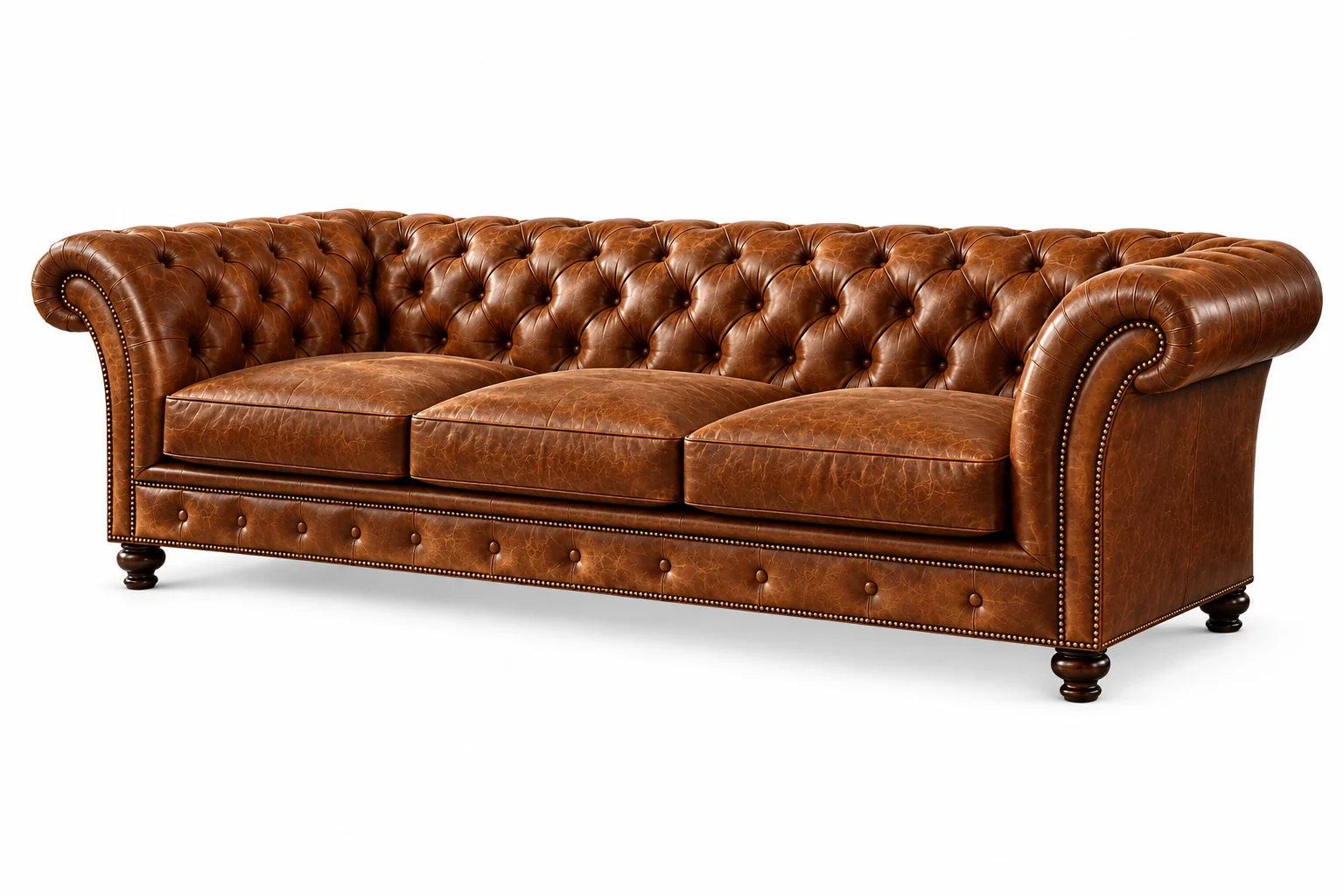
Comfort, honestly
Are Chesterfield Sofas Comfortable?
Yes—when the depth and cushion firmness match how you sit. A Chesterfield is not a sink-in cloud sofa by default. Rolled arms and a structured back favor an upright, supported sit unless you choose Deep seat and a softer cushion.
What comfort means on a Chesterfield
Traditional Chesterfields support conversation posture: feet nearer the floor, back against tufting, arms at a usable height. If you want television sprawl, prioritize Deep seat and a plush cushion option where offered.
Regular vs Deep for comfort
Regular depth suits dining-adjacent living rooms and guests who sit upright. Deep seat is the comfort upgrade for movie nights and taller sitters who want more thigh support.
Who may find them less comfortable
If you need a very soft, unstructured lounge—or you dislike a firmer front rail—test expectations carefully. Chesterfields are distinctive because they hold shape; that structure is the point.
Comfort matching
| How you sit | Depth | Style tip |
|---|---|---|
| Upright conversation | Regular | Classic or Square Arm |
| Mixed use | Regular or Deep | Sloped Arm softens the front |
| Lounge / stretch out | Deep | Camelback or Classic with Deep |
| Smaller frame sitter | Regular | Avoid oversized Deep in tight rooms |
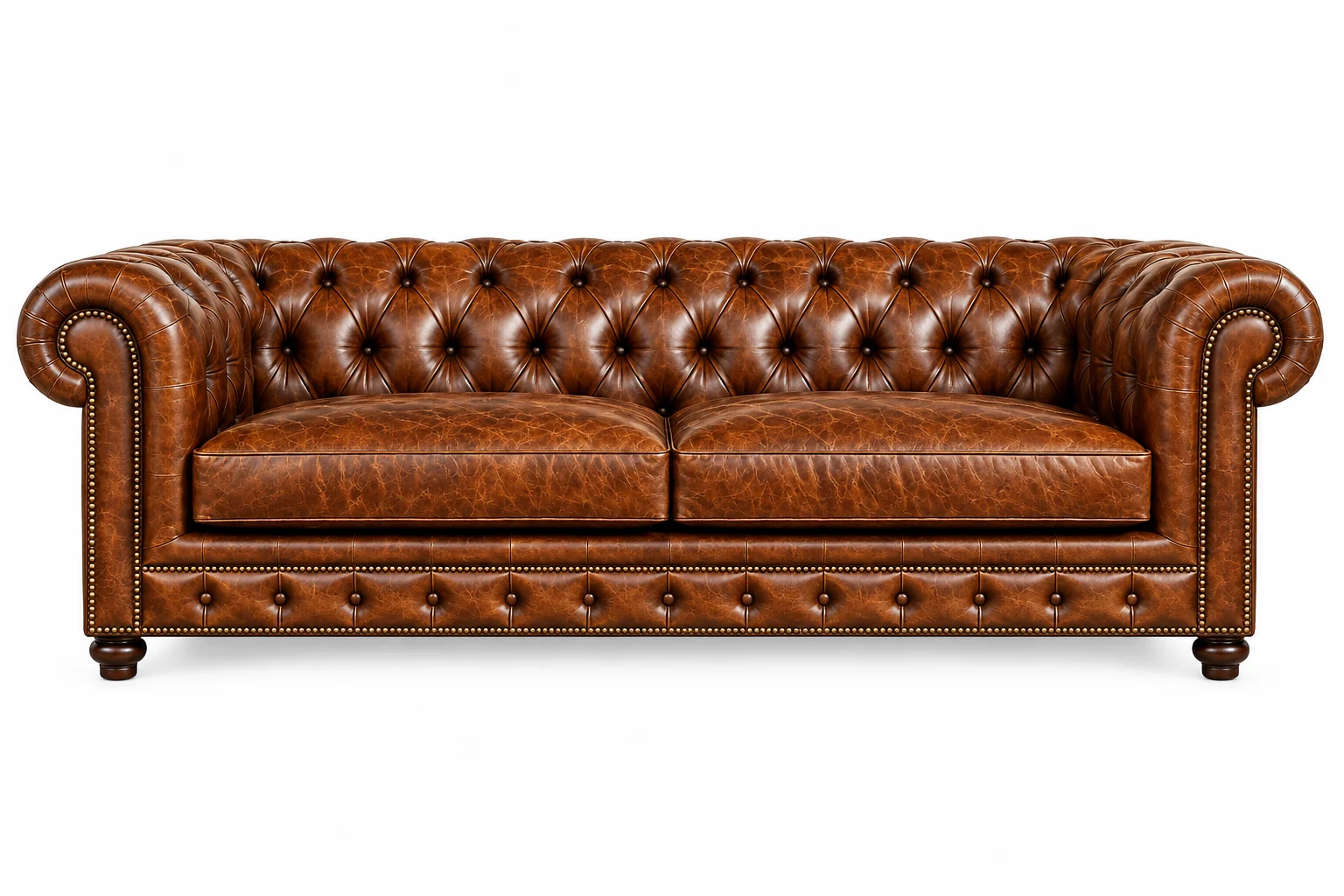
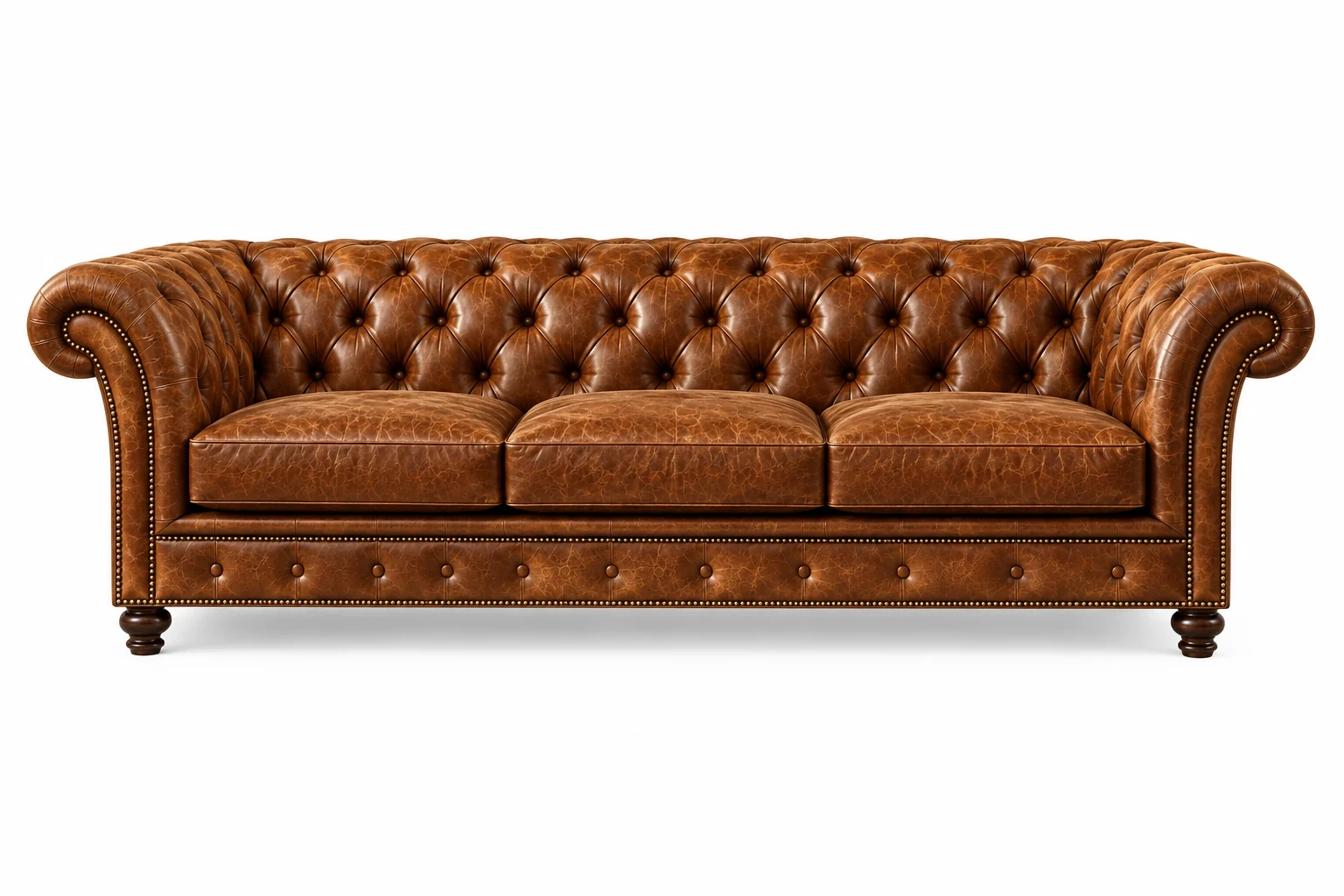
Pieces to consider
Frequently asked questions
Are Chesterfield sofas good for everyday lounging?
They can be, especially with Deep seat. Out of the box, the classic Chesterfield favors a supported upright sit more than a mushy lounge sofa.
Does tufting make a sofa uncomfortable?
Deep buttoning creates a structured back. Many people like the support; others prefer a smoother back. If you want maximum softness, prioritize cushion choice and Deep seat rather than expecting the tufted back to feel like a pillow wall.
Can I make a Chesterfield more lounge-like?
Choose Deep seat, a softer cushion option when available, and a style with a gentler arm—such as Sloped Arm.